Design Your Own Cloth Doll
Class
©1995 with additions copyrighted 1996-1997
Taught by Judi Ward of Judi's Dolls
Chapters 7
Hair Style Ideas and Several Hairstyles
If you have made a few cloth dolls, you have done some hairstyles and some of you are excellent doll hairstylists. Now that you have designed and made your own doll design, you can happily practice, invent and elaborate on hairstyles you have done before, and I hope to give you a few more ideas to make hairstyling fun.
Materials to use for hair for cloth dolls are almost limitless, depending on the type of doll you are making and the way it will be used. Moss and Raffia are not good choices for a play doll and jute and torn rags may not be a good choice for a fancy lady doll. But in the end the choice is up to you.
First I want to list some things that I have used or seen used for hair, and also some things that I just thought up, but haven’t used yet.
Yarn - embroidery thread - crewel yarn - punch rug yarn - torn cloth – raffia – moss - wool roving - pom poms -bumpy chenille – curly chenille – stringles – mohair - various packaged hair fibers from craft stores like folk wool and wavy hair – fake fur – real fur – weeds – wheat straw – ribbons – feather boas – sewing thread – wood shavings – chenille yarn – human hair – doll wigs – buffalo fur from Yellowstone Park - tiny sea shells – buttons, etc. The list can go on for ever! There is no limit.
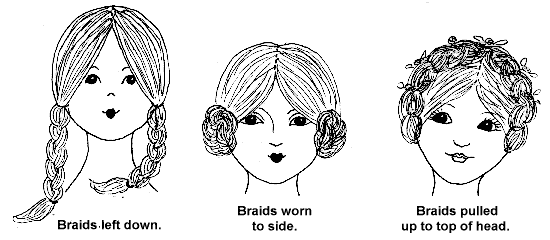
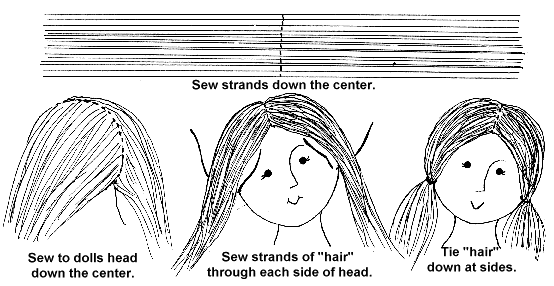
The easiest hairstyle is probably low ponytails or braids. You simply pull off enough strands of yarn, thread etc. to cover the part area of your doll's head from the forehead to the nape of the neck. Stitch this bunch of strands down the center. Then sew or glue it to your doll's head, making a center part. Pull the “hair” to each side of the head, and then tie it down with another piece of the “hair” which you have sewn through the head side. You can leave the “hair” in the low ponytails or braid it.
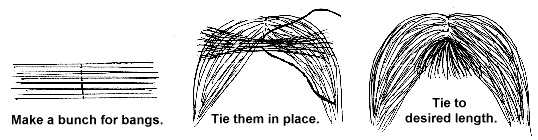
If you wish to add bangs, make another bunch of strands, sew them down the middle, then tie them at the center of the head right where the part is in front, just like you tied the sides of the “hair” down. Trim the bangs to the length you want.
When made from yarn or embroidery thread, this is a great, quick and durable hairstyle for a play doll, or country look doll. If it is made from very fine fibers like silk thread or real or synthetic mohair it makes a nice hairstyle for an Indian if you braid it. You can also wind the braids around at the sides, tacking them down as you wind. This results in a cute Heidi or Dutch look. Pull the braids up and criss cross them at the top of the head, tack them in place and wind tiny flowers through and you have a pretty, fancy “do”.
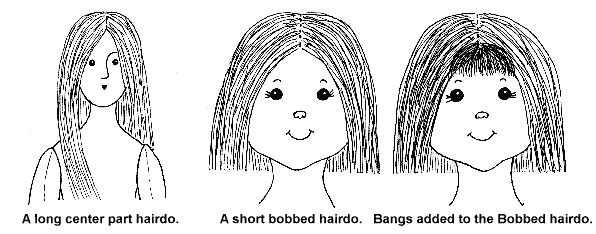
This same simple center part style can also be left long, or cut short, and be left down rather than braided or pony-tailed. Stop the center part at the crown of the doll's head. “Finger comb” it down evenly, all around the head, then lift small sections at a time, and glue the under layer to the dolls head. The “Hair” will need to be trimmed nice and even after the glue dries. This hairstyle is not real durable, if the doll is going to a child who drags her dolls around by the hair.
If left very long it makes a beautiful long hairdo for princesses, Rapunzel, fairies, and little girls. There is just something about long hair on a doll that is sort of magical to me.
If you cut this hairdo into a “Bob” it makes a great Flapper hairdo, or a cute little girl hairdo. You can of course add bangs too if you wish.
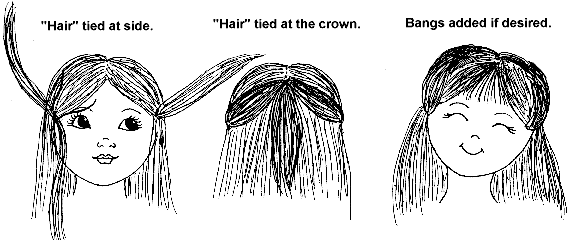
Another addition to the above basic hanging down hairdos would be side pull-ups. Tie a small bunch of the “hair” yarn etc. into the head at each side, at about eye-level. These bunches need to be the same length as the original hair strands. Sew a strand of the yarn etc. into the head just below the crown. Now pull the side strands up to the crown and tie them down. This makes another little girl style. It also makes the long or short hanging down hair more playable. The little “doll wreckers” can drag the doll around by the ponytail at the crown.
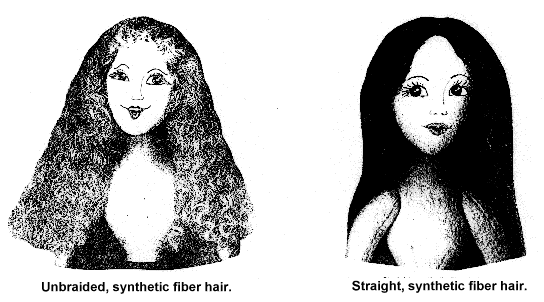
Any of the above hairstyles can be made from a variety of materials, each giving the doll an entirely different look. Fine, soft, synthetic fibers that come packaged in about 1 yard hanks can be done in the hairdos described above, and they are beautiful for display type, art dolls. This packaged “hair” comes straight and curly. It also comes in braids that you unbraid to get “crimped look” hair.
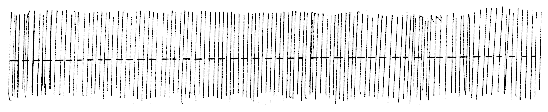
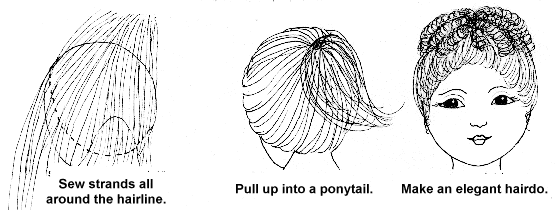
A single pony tail hairdo is also easy to make from a variety of materials. Simply machine sew down the center of enough long strands to wrap all the way around your doll’s head. Place the “hair” around your doll’s head with the stitched part along the doll's hairline all around the head. Half of the “hair” will be hanging down over the doll’s face and down the back, and the other half will be going up toward the top of the head while you sew it on. Sew the “hair” down to the hairline along the machine stitching, and then finger comb it all back into a high ponytail. Tie or rubber band the ponytail in place.
This is a great, easy to do hairstyle for a 50s look doll. It is also darling on a child doll and is a good play doll hairdo.
You can make this simple ponytail hairdo very elegant by curling strands around your finger or a pencil, and then one at a time, arranging the sausage curls around the head and stitching or hair pinning them in place.
Enough strands sewn down the center by machine to wrap all the way around your doll’s head. They need to be long enough to make a nice long ponytail.
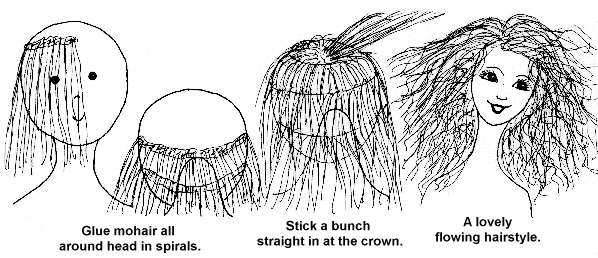
Real mohair fiber is the choice of many cloth dollmakers. It comes in lots of lengths, and is wonderfully wavy. It is very fine so it is in scale with the small size of a doll. I personally, don’t like the wefted mohair on small dolls. It makes thick, hard to cover places. I like to glue the unwefted mohair right to my doll’s head, using a “Cool” glue gun. Glue it all around the head in a spiral design, spreading it out on the glue. When you get to the crown, put a bunch of the mohair right straight into a dab of glue. The whole head will be fully covered and the mohair can be carefully brushed and styled.
On small dolls, this type of mohair hairstyle will seem long and ethereal. Perfect for fairies and fantasy creations. The mohair will fluff out and flow very softly.
Tame it into the style you want with hairspray. I use this method on my polymer clay “one of a kinds” too.
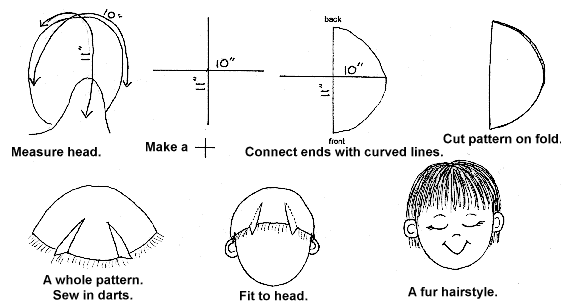
Fur, both real and fake makes nice hair for boys and babies. It also made nice hair for the undressed elf on the introduction page of the class. His hair is made from an old red fox collar that I bought at a thrift store.
To make a fur wig, measure your dolls head from
ear to ear. Then measure from the forehead hairline to the nape of the
neck. Draw a  with
those measurements. Connect the ends of the with curved lines. You only
need to draw two curved lines, because you need to cut the wig pattern
on the fold so both sides match. Draw around the opened wig pattern on
the back of your fur. Cut the fur wig out carefully, cutting only the backing,
NOT the fur. Sew darts in the fur backing, first, one on each side of the
center front, then one on each side of the center back. Try the wig on
your doll and add more darts as needed to make the wig fit. Glue or sew
the wig to your doll's head.
with
those measurements. Connect the ends of the with curved lines. You only
need to draw two curved lines, because you need to cut the wig pattern
on the fold so both sides match. Draw around the opened wig pattern on
the back of your fur. Cut the fur wig out carefully, cutting only the backing,
NOT the fur. Sew darts in the fur backing, first, one on each side of the
center front, then one on each side of the center back. Try the wig on
your doll and add more darts as needed to make the wig fit. Glue or sew
the wig to your doll's head.
 With
the hairstyles you have done before on other dolls, and now these added
ideas for hairstyles you should be able to make a different hairstyle for
dozens of different dolls. Remember that simply changing the material you
use for the hair, say from torn muslin to long synthetic fiber, you can
change the whole look of a doll.
With
the hairstyles you have done before on other dolls, and now these added
ideas for hairstyles you should be able to make a different hairstyle for
dozens of different dolls. Remember that simply changing the material you
use for the hair, say from torn muslin to long synthetic fiber, you can
change the whole look of a doll.
For added beauty and interest add bows, flowers, beads etc. to the hairstyles you make on your dolls.
Of course don’t forget real doll wigs for your dolls. I use them a lot for special dolls. Real doll wigs are not very playable, so don’t use them for a doll that will be played with a lot.
Have fun as your doll’s hairstylist, and experiment with different fibers for different looks.
Judi Ward
Judi's Dolls
http://JudisDolls.com
© 1998, Internet Visions Co. All rights reserved. All trademarks are owned by Internet Visions Company.