All of the new bodies will be designed from the body/bodies that you designed in The Beginning Design class.
You will need to do a tiny bit of freehand drawing, but nothing hard.
This chapter will be mostly diagrams, as that is
the best way to show you these techniques.
Some of you have designed bodies for jointed dolls. Some have designed
bodies for stitched on legs.
Some of the techniques will work for either kind of body, and in those cases, I will demonstrate on only one kind of body.
You will need to employ your new design skills in some places, to decide just what is needed to achieve a certain look.
It’s time to really think ahead and design on your own now. The basics will be here, but some of the decisions will be totally yours. Things like do I want a dimensional body back and a flat body front? Do I want a darted bust and bottom on a doll, or just a darted bottom? Do I want the body to be longer? Shorter? Fatter? Slimmer? You have all the skills to make those changes already in place from previous lessons.
I had originally planned to keep all of the “boobs” in chapter 7, but some less “Bodacious” ones, work right into some basic body changes so they will be part of this chapter.
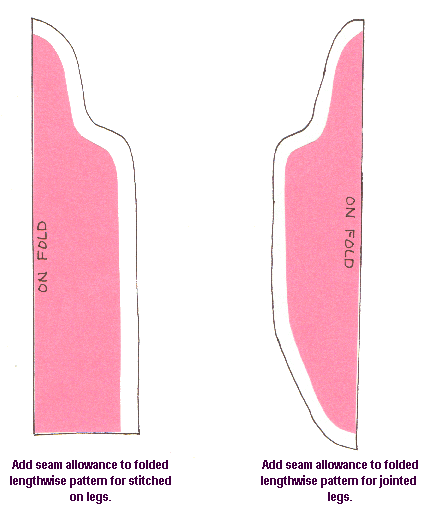
The first thing you need to do, is get your body pattern/patterns out, fold them lengthwise, and draw around them on new paper. Now add a 1/4” seam allowance around the patterns as shown in the diagram (Diagram Below). If you have designed the straight across the bottom pattern, for stitched on legs, you don’t need to add the seam allowance at the bottom, or along the fold.
For the jointed leg body, you don’t need to add a seam allowance along the fold at this time. (You will need to add it later, when you design the bottom, and tummy version of this body.) When changing the bodies, what you need to keep in mind is that, any place you are going to add a seam, you need to add a seam allowance.
Make several copies of your re-drawn patterns, either on a copy machine or by hand. To do them by hand, cut out the first drawing. Place it on new paper, draw around it, and then put a few more pieces of paper under it and cut several out at once.
If you made copy machine copies, cut them out. Start with 10 body patterns. You are going to be cutting them apart for various bodies. It’s nice to have several already cut out and ready. Set the original aside in a safe place, so you don’t cut it up! Or you may have to redraw around it! Not a real big deal, but may stop the flow of creative juices!
Wherever it is appropriate, the drawings will have the original, no seam allowance, patterns shown in pink, so you can track the changes.
If I show a “Draw Around”, I will label it, and draw it with double lines, but won’t show the whole thing, because it would look confusing showing on both sides of a pattern. For instance, a “Draw Around” for the bottom, would show sticking out at the side-seam of the pattern too.
First, lets make some changes to the straight across the bottom body.
The first 2 changes will make a darted bust and a darted bottom, so the doll has a bit of a “sit-upon” and a small bust. The size of the darts is your decision. The method will also work for the jointed leg body.
First, fold 2 of your patterns in half, from the shoulder area to the straight bottom. Now fold the halves in half. Unfold and then mark the bottom fold line on one pattern and the top fold line on the other. (Diagram Below)
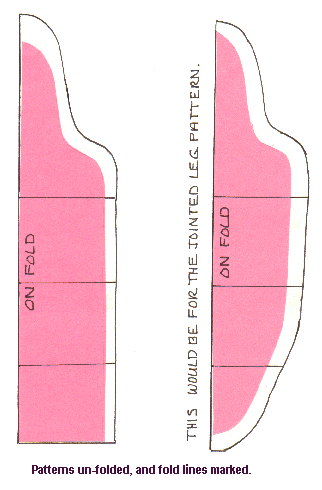
Now cut the fold apart at the upper 1/4 on 1 pattern.
Cut the fold apart at the lower 1/4 on the other pattern. Don’t do anything
at the waistline.
Lay the pattern parts down on new paper and separate
the parts as much as you wish, 1/2”
3/4” 1”, depending on how deep
you want the darts. Bear in mind the size of your doll’s body. You wouldn’t
want 1” deep darts on a body only 4” long! But, the deeper they are,
the larger the bust and bottom will be.
Diagram of these steps.
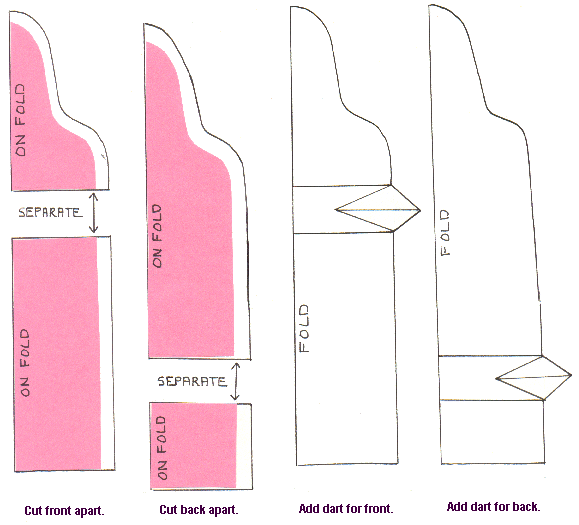
The pattern that is cut apart at the top fold, will be the front of your doll’s body. The one that is cut at the lower fold, will be the back of your doll’s body. Be sure to separate both the front and the back the same amount.
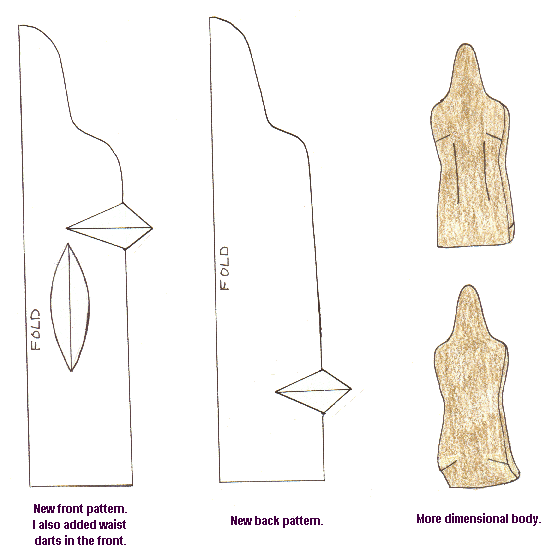
Now draw a point for the darts, at the sides of the separations, as illustrated. Finish drawing around the rest of the patterns. You now have a new front and back pattern for a more dimensional body designed for stitched on legs.
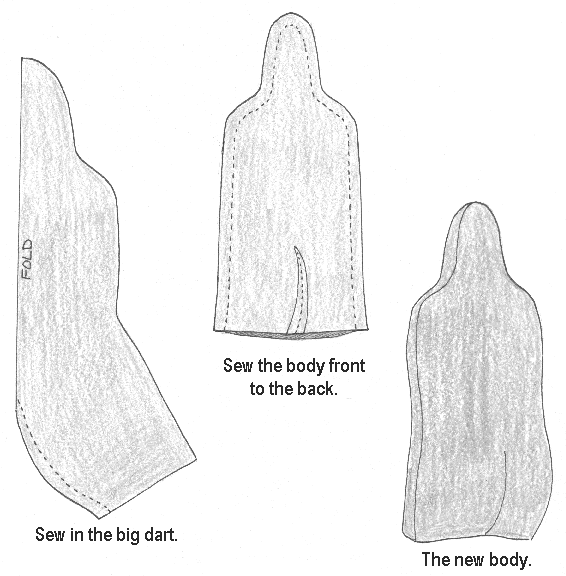
When you sew the darts in, it brings the side length back to the original length, but gives extra room in the front and back for more roundness in your doll’s body. (Diagram Below)
Remember that you can also make the above, simple dart changes, in the jointed leg body, using the same method.
Now, let’s make a “body back only” change, to the “stitched on leg” body pattern. This change will give a deep “sit upon”.
It is great for dolls intended to sit firmly in chairs or perhaps on the edge of a shelf. You can make a little bag full of B-Bs and put it in the bottom for extra sit-ability.
Get another of your “straight across the bottom” patterns. Fold it in half and mark the fold. (Remember you fold from the shoulder area, not the top of the neck.)
Put it down on a new piece of paper. Draw around the upper half. Put a pin in at the fold line on the side seam, and then pivot the whole pattern to that side. Draw down the rest of the side seam and across the straight bottom. You will have a triangular shaped space at the bottom center. Draw a line on an angle towards the fold, but not clear to the waistline. Finish the line on the fold from the waist to the angled line. The illustrations will clarify this better.
Illustrations Below
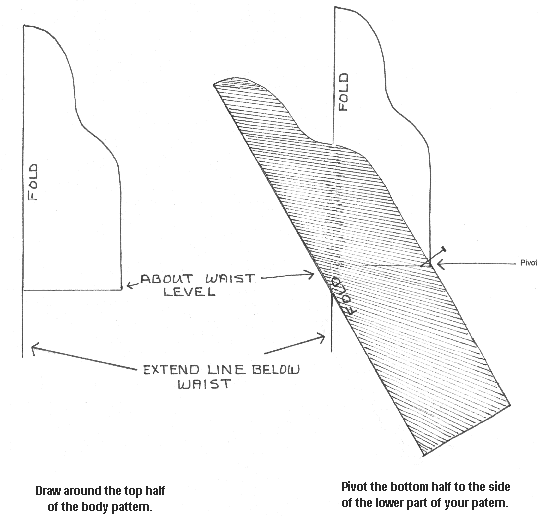
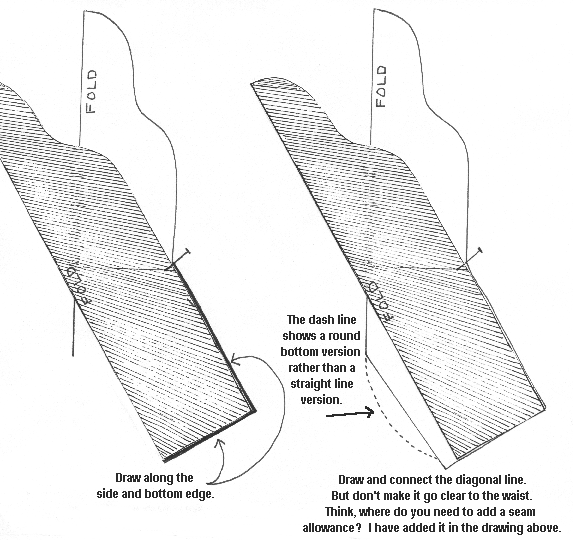
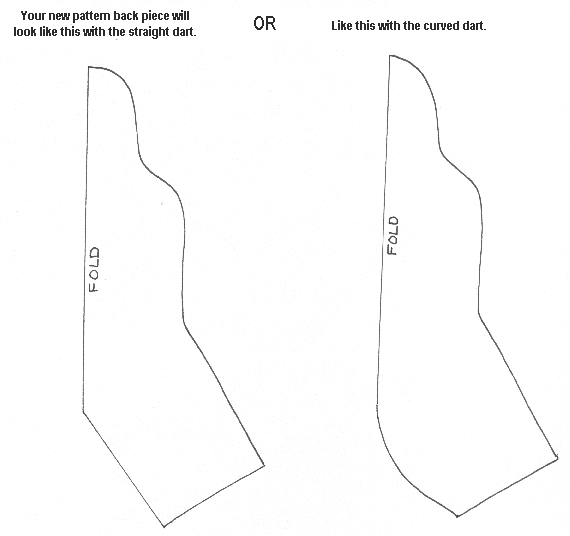
You will sew in the big dart, and sew the front and back together as usual, leaving the bottom open for sewing the legs into.
You may want to curve the dart line. I have drawn
it in with dotted lines on the drawing above. The curved line will make
a nicer shaped bottom area.
|
 |
Think: Can the previous, body back re-design be done for the back of the jointed leg body? Try it, to expand your design techniques. What pattern will you use for the front of the body?
Think: Can the above re-design be used in conjunction with the bust darts method for the body front?
The answer is yes, to the questions above, and you have the skills in place to do the changes.
Note: On the jointed leg body, the sit-upon area won’t be as flat and won’t take to the bag of B-Bs as well as the straight across body. What else might happen if you put a bag of B-Bs in place and then try to put the jointing needle through?
Think of another change you could make to the body,
to change the look of your finished doll completely.
How about a longer neck? Wider shoulders?
Can you think of any other changes you could do to the above body styles?
Next, we will give your basic jointed leg bodies a center seam in the back, and design a rounded bottom (Diagram Below).
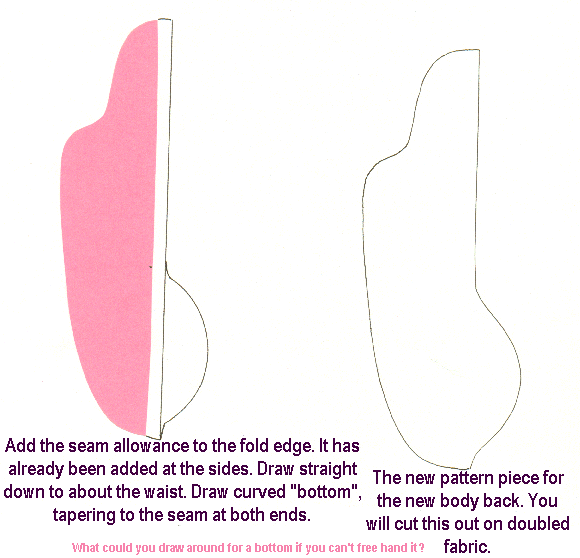
This back can be sewn to the flat front it was
designed from. This is a great pattern for a child, elf, or male body.
It would make up well in printed fabric for a doll you aren’t going to
fully dress.
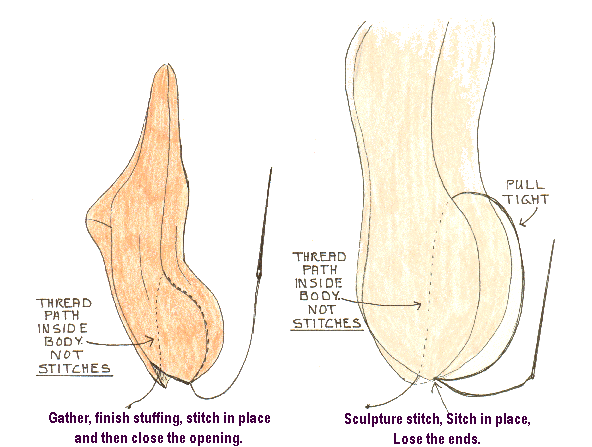
One way to form the “bottom”, after the new body is sewn and nearly stuffed, is by running a gather stitch right down the seam, from the top of the “crack” to the bottom of the seam. Pull the gathers up and add stuffing to round out the bottom. When it is stuffed and formed to your satisfaction, stitch in place to anchor off the gather stitching, and then close the opening with a ladder stitch. This gathering method is best for bigger dolls, and later for the dolls with a belly button.
Another way to form the “bottom” is to finish stuffing
the whole body, taking care to fill out the “bottom” area very smoothly
and well. Close the opening with a ladder stitch. Using your long sculpture
needle, sew from the crotch to the top of the “crack”, then back to the
crotch. Take a stitch and then pull the sculpture stitch tighter to form
the bottom. Stitch in place, and lose the ends. This works well for small
dolls.
 |
Now it’s time to make the body front designed for jointed legs more shaped. From this we will add a belly button version.
Add the seam allowance to the front fold. Draw a curved seam down the front defining the chest and tummy (Diagram Below). This design is good for child dolls. If you give the body front a big belly, what can you turn your doll into? A Santa? A fat elf? A fat clown? I turned one into a fat lady with a bodacious bust. She will be pictured later.
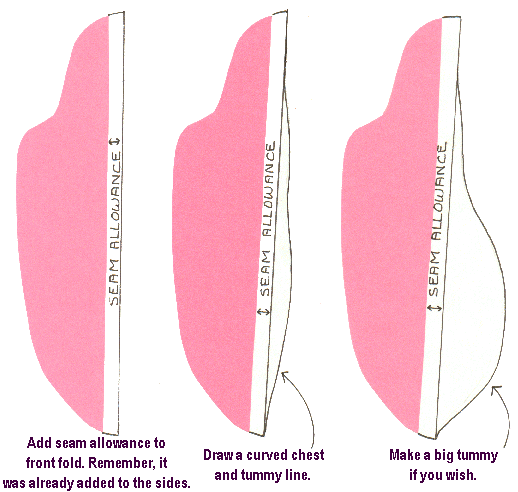
The size of the tummy is up to you as the designer. Use a “draw around” if you need to, but this curved line is really quite easy to do. There are no rules regarding the size. There is no “only” size acceptable. It’s your design, go for it!
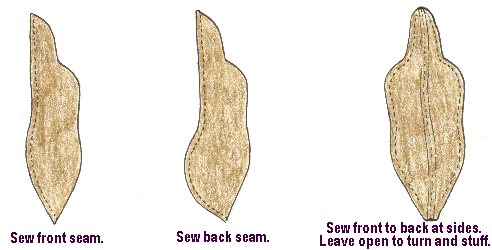
This front will be cut out on doubled fabric, just like the back that you added a “bottom” to. Sew the center front seam of the front. Sew the center back seam of the back. Sew the sides together, leave the body open at the bottom to turn and stuff. Finish the “bottom” as described before.
Can you add darts to this body design? The answer
is yes. How? Go back to the beginning of this chapter and review the darting
methods. The same methods work for these bodies with center front and back
seams.
 |
Now let’s add a real looking “inny” belly button to the body front. This is a belly button type that I have used for many years. It looks so real you won’t believe it. What you do is add what looks like a bubble to the body front seam, just below the waist. It doesn’t have to be perfect; it can be rounded or squared off. It is going to be pulled inside, so the shape won’t show. I can’t give you an exact size for this addition, because we are all doing different sized dolls. A “kind of” rule of thumb would be 1/16th of the body height. For instance, a body that is 8” from the top of the shoulders to the bottom of the body would have a 1/2” wide “bubble”. This is not scientific, nor the “only size” acceptable. You are a designer now, try a couple of sizes. See what you like in the finished “look”.
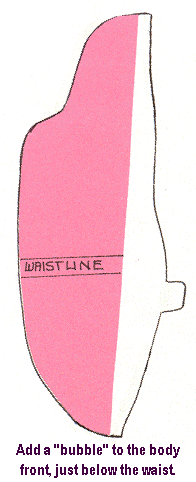
The way you stuff this body, is the same as with the 4 piece body with a bottom that you designed just previously, except you will stuff down to just below the belly button.
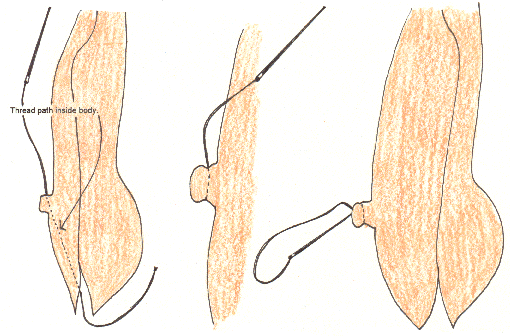
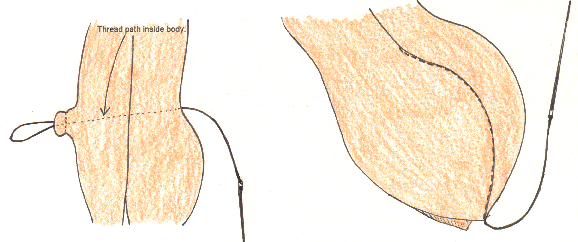
Put a needle with a quadruple thread, into the " stickout” part of the belly button, from the inside. (See illustration to see where to bring it out.)
Sew a gather stitch around the "stickout" part
about 1/2 way between the tip and the body surface. Pull the gathers tight.
Now, bring the needle out in the middle of the “stickout” part, and then
back into it. Bring the needle out at the center back, where the “bottom”
starts. The thread will be inside the body from the belly button to the
start of the “bottom”.
 |
||
|
|
|
|
 |
|
|
|
|
See, you don’t have a bubble on your doll’s tummy! You should have a real looking “inny” belly button. It will even have little wrinkles in it!
With another quadruple thread, close the opening in the body with a ladder stitch, adding more stuffing as needed to finish out the nice rounded bottom and lower body. Stitch in place to anchor your stitching, then "lose the ends".
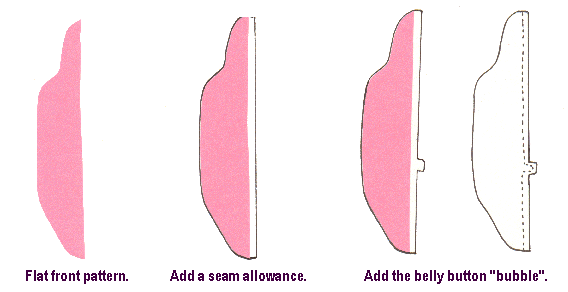
The above body with a “bottom” and belly button
is shown done on a pattern with a curved tummy and chest area. Can the
belly button be added to a flat front pattern? What do you need to do at
the front fold in order to add the belly button “bubble”? The answer is
in the diagram. But you knew the answer anyway, right?
|
Lets review the body styles you have designed from the flat,
2 piece, tab head body.
I will diagram some other design changes you may want to play with for your bodies, to add even more versatility to your patterns. Remember to do all changes on 1/2 of a front or 1/2 of a back, so that when you cut your pieces out on doubled fabric both sides will match. The original flat body is shown in pink.
Play with various body changes for fun. Sometimes you may make a doll up one way and decide it would be great with a longer body. Try it that way. How about a shorter body? Try it that way. How about real fat? Front, back and sides? Try it that way (Example Below).
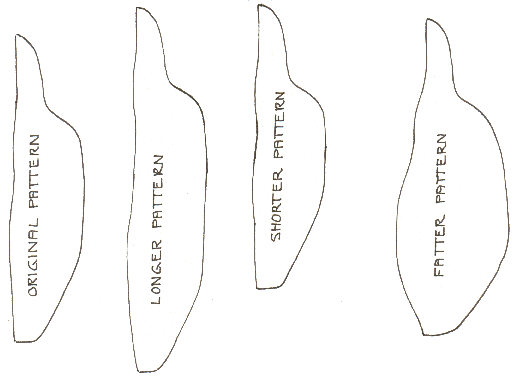
Again, one of the big parts of designing is to
allow your-self to try different things. Your doll doesn’t have to look
like any picture, or anybody else’s doll. My doll style preferences will
come through in this class, but that doesn’t mean your dolls have to echo
that style preference. I like realism and asymmetrical shape, even if I
am doing a comical or fantasy type doll.…But….I see pictures of dolls in
magazines that are anything but asymmetrical. Some have 2 different types
of legs and arms. Some have lopsided faces and bodies. Some have more than
2 arms and legs. It isn’t my style of doll and it may not be yours either,
but then again, it may be just the style you desire to design and make.
With the design “tools” you have here you can design, re-design and explore
your ideas within a format that works.
The bodies you have designed have shape and form,
and small, darted busts if desired.
In the next chapter I will teach you 3 busts that can be BIG and BODACIOUS! One is an add-on, and two are built into the body design.
Have some copies of your original jointed and un-jointed
body designs ready, with the center front seam allowances added on a couple,
and without the center front seam allowances added on a couple. We will
design the much-awaited Bodacious Boobs!